
RELATED Live.
- About us
- Find Hospitals
-
KIMA Doctors
- All
- Anesthesiology
- artificial joint center
- Breast and Endocrine Surgery
- Breast cancer and thyroid cancer center
- Breast Surgery
- Cardiology
- Cardiothoracic Surgery
- Cerebrovascular Center
- Colorectal Surgery
- dental and maxillofacial surgery
- Dermatology
- Endocrinology
- Gastroenterology
- General Surgery
- Genito-Urology
- Hematology
- Hemato-oncology
- Infection Center
- Internal Medicine
- International Healthcare Center
- Korean Medicine
- liver center/Pancreas and billiary tract center
- Liver Transplantation
- Neurology
- Neurosurgery
- Obstetrics & Gynecology
- Ophthalmology
- Orthopedic
- Otorhinolaryngology
- Pediatric & Juvenile
- Pediatric Allergy and Respiratory Diseases
- Pediatric Gastroenterology
- Pediatric Neurology
- Pediatrics
- Physical Medicine & Rehabilitation
- Plastic & Reconstructive Surgery
- plastic surgery
- Pulmonology
- Radiation oncology
- Rheumatology
- Thyroid & Endocrine Surgery
- Urology
- Vascular Surgery
- KIMA News
- KIMA Live
- Community
KIMA NEWS
“The foreign clinic, which started in a corner of the hospital, has grown into a full-fledged ‘International Healthcare Center’ with five dedicated physicians.”
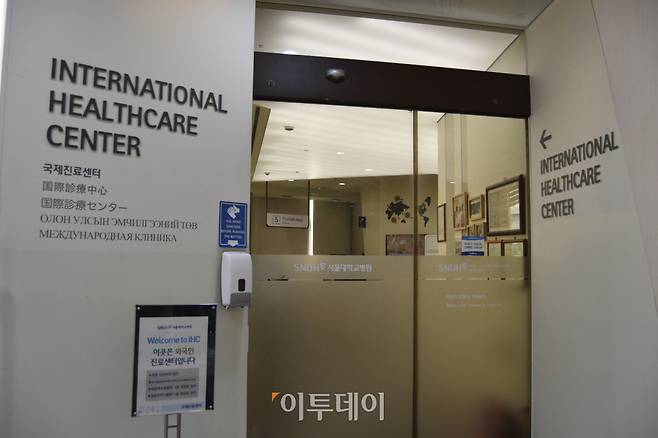
Professor Lim Ju-won (Family Medicine) at the Seoul National University (SNU) Hospital International Healthcare Center explains that Korea is becoming a preferred destination for patients with severe and intractable diseases worldwide. As the number of international patients continues to rise, major tertiary hospitals, including SNU Hospital, have established dedicated centers to accommodate them. Professor Lim emphasized, “As the number of foreign patients visiting Korea increases, our medical education system and government policies must improve accordingly.”
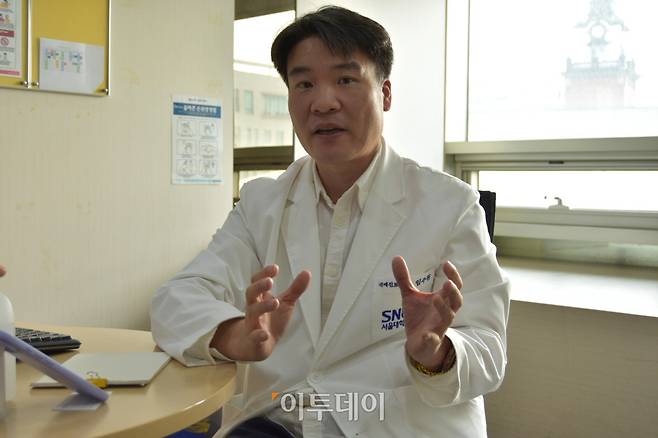
We met with Professor Lim at the International Healthcare Center on the 2nd floor of SNU Hospital’s main building in Jongno-gu, Seoul, on January 26th. Having experienced the history of attracting foreign patients firsthand, he is an expert in ‘International Medicine.’
Foreign patients began visiting SNU Hospital in the early 2000s. At that time, a small clinic operated on the first floor without dedicated professors. Professor Lim, then a resident, first experienced treating foreigners as dispatched personnel. Since then, he has remained in the field of international care, acquiring know-how from scratch in an area that lacked a proper education system. Opened in 2010, the SNU Hospital International Healthcare Center now treats over 30,000 patients from about 80 countries annually.
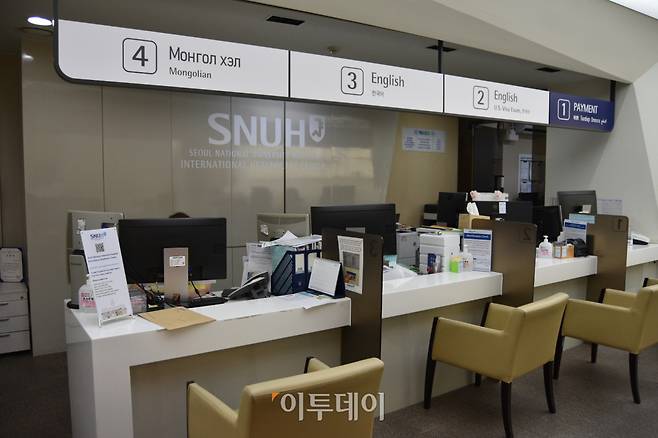
Patients visit Korea because they suffer from rare or intractable diseases difficult to treat in their home countries or cannot endure long waiting periods. The age range is diverse, from parents bringing children with rare diseases to middle-aged patients in their 50s and 60s seeking cancer surgery. Patients requiring transplants that are impossible in countries with poor medical infrastructure also prefer Korea.
Professor Lim explained, “Korea holds a global competitive edge in minimally invasive thyroid cancer surgery without scarring. Many patients from Central Asian countries, where transplant surgery and management systems are lacking, come for liver transplants.” He added, “Korea has an overwhelmingly high survival rate and capability for stomach cancer surgery due to the high incidence of the disease relative to the population, making Korea a preferred choice for stomach cancer patients as well.”
Patients choose Korea for various reasons. Most commonly, they have experienced life in Korea or received recommendations from acquaintances who have undergone treatment here. In recent years, cases of visiting based on AI recommendations have increased significantly. Many patients state that when they asked AI search engines for "countries good at treating specific diseases," Korean university hospitals were listed in the answers.
AI is also proving helpful for the center's operations. Using AI for immediate document translation drastically reduces work time. Furthermore, unlike in the past when doctors faced patients with no background information, patients now enter the consultation room having already obtained detailed information on schedules, budgets, and accommodations via AI, making communication much smoother.
Professor Lim said, “Nowadays, many patients bring treatment plans written by AI and ask, ‘Can we proceed like this?’ I am often surprised because AI provides detailed guidance on flights, hotel costs near the hospital, booking methods, treatment schedules, and transportation.” He added, “While concierge service companies for foreign patients are common abroad, they are rare in Korea; AI is effectively filling that role.”
Continuous effort is required to understand the cultural differences in medical practices and provide necessary help. While "3-minute consultations" are common in Korea, the standard consultation time in the U.S. or the Middle East is 30 minutes. Small talk unrelated to treatment is considered natural. Treatment plans must account for differences in skin color, body type, dietary habits, local climate, and lifestyle.
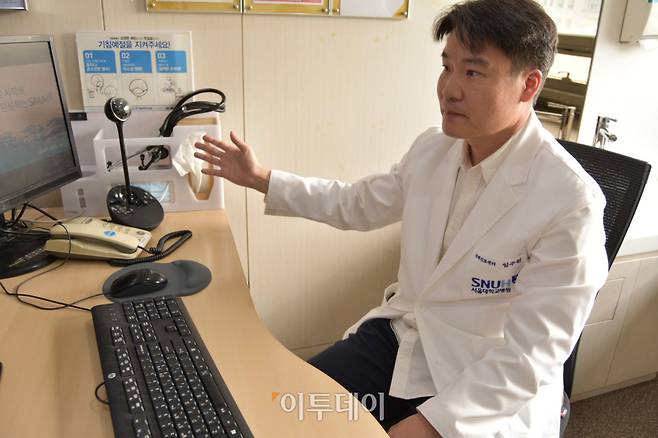
Professor Lim recalled with a smile, “In the early days, I visited all the leading medical tourism countries like Thailand, Singapore, Germany, and Switzerland to observe their systems. I even watched YouTube videos of foreign doctors to learn conversation skills and how to understand patients from different cultures.” He noted that Korea’s current performance in attracting foreign patients is an asset built upon these accumulated efforts.
Professor Lim advises that an education system is needed to properly train Korean doctors to treat foreign patients. As society becomes more multicultural, doctors will inevitably encounter more diverse patients, not just those visiting for medical tourism. Without education and training, it will be difficult to meet the growing demand. Of course, appropriate fees and compensation systems are also necessary.
“Korean doctors are placed in a monotonous environment treating typical Korean patients under a single national medical system,” Professor Lim expressed concern. “Without prior learning, it is very difficult to treat foreign patients properly.” He suggested, “Currently, at SNU, international care can only be learned as a small elective course, but in the future, many institutions should establish a systematic educational foundation and accompany it with a reasonable compensation system for talent development.”

Inquiry